Isaiah 5:1-7; Luke 13:6-9
“Let me sing for my beloved my love song concerning his vineyard.”
A cursory reading of Isaiah’s opening chapters could be perceived as despairing, with but a few bright spots dappled in to lighten the load: “It shall come to pass in the latter days that the mountain of the house of the LORD shall be established as the highest of the mountains” (Isa. 2:2). “Come, let us go up to the mountain of the LORD (Isa. 2:3). “He shall judge between the nations and shall decide disputes for many peoples; and they shall beat their swords into plowshares, and their spears into pruning hooks; nation shall not lift up sword against nation, neither shall they learn war anymore. O house of Jacob, come, let us walk in the light of the LORD” (Isa. 2:4-5). Nonetheless, throughout the first four chapters, it’s negative, heavy, and “you sorry rascals” talk from God. Quite depressing… “Ah, sinful nation, a people laden with iniquity, offspring of evildoers, children who deal corruptly! They have forsaken the LORD, they have despised the Holy One of Israel, they are utterly estranged” (Isa. 1:4).
The heaviness arises from the downward trajectory of once-good King Uzziah’s reign. Uzziah (called Azariah in the book of 2 Kings) was one of the better kings in the history of the southern kingdom of Judah who began with hints of Solomonic glory, but unfortunately, repeated in an inglorious Solomonic ending— Beginnings fueled by promise, accompanied by wealth, galloping military success and comfort thrown in for good measure, which then devolved into self-sufficiency, forgetfulness and finally corruption. Sad. Tragic.
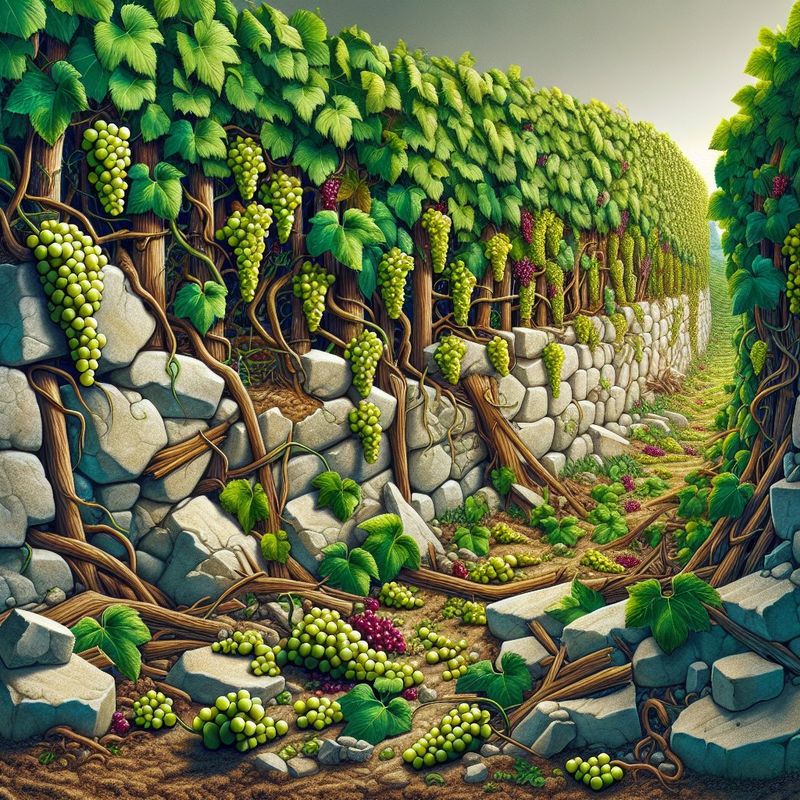
Into this morass, Isaiah 5 speaks a contrary word to poke the contrariness of God’s people. “Let me sing for my beloved my love song concerning his vineyard…” (Isa. 5:1). It unpacks the actions of a loving vinedresser planting a vineyard, carefully tending it and protecting it, and nurturing it, only to see this labor of love produce only sour grapes. “Ah, sinful nation.”
The vinedresser says, “What more was there to do for my vineyard, that I have not done in it?” (Isa. 5:4). “And now I will tell you what I will do to my vineyard. I will remove its hedge, and it shall be devoured; I will break down its wall, and it shall be trampled down. I will make it a waste; it shall not be pruned or hoed, and briers and thorns shall grow up; I will also command the clouds that they rain no rain upon it. For the vineyard of the LORD of hosts is the house of Israel, and the men of Judah are his pleasant planting; and he looked for justice, but behold, bloodshed; for righteousness, but behold, an outcry!” (Isa. 5:5-7).
In hindsight, we know that the northern kingdom of Israel and the southern kingdom of Judah were ushered into exile, fulfilling these terrifying words of the vinedresser’s intent to let the vineyard be despoiled. As I pondered this bittersweet parable from Isaiah 5, my mind wondered to the Gospel of Luke, where I remembered Jesus putting a slightly different spin on the garden imagery of Isaiah. This time, not with grapes of wrath, but a tree, a solitary fig tree planted in the precious, fertile soil of a vineyard (Luke 13:6-9). It is known that fig trees take a long time to mature and bear fruit, taking at least three years to produce sustaining fruit. The vineyard owner was not being unreasonable in expecting fruit in three years, but seeing no fruit, he was ready to have the tree uprooted and thrown out of the vineyard. Nevertheless, the compassionate vinedresser pleads the for the life of this unproductive tree. “Please, just give it a little more time. I’ll loosen up the soil around it and give it more fertilizer. If after one more year it bears no fruit, well, then you can cut it down.”
The tender care of an obstinate fruitless tree from this vinedresser, a picture of the Lord Jesus, not willing that it should perish. Setting before the tree life itself. The picture in Isaiah is really no different, but in Jesus, we see the longsuffering and tenderness up close and in person. The picture in Isiah and the Gospel is of a God who refuses to give up and ever offers the way to life. Always an opportunity to return. It makes me think of the prophet Ezekiel’s words uttered in the midst of Babylonian Exile: “Cast away from you all the transgressions that you have committed and make yourselves a new heart and a new spirit! Why will you die, O house of Israel? For I have no pleasure in the death of anyone, declares the Lord GOD; so, turn, and live[!]” (Ezek. 18:31-32).
In Jesus, this is our word, too.